Cryptocurrency investing has matured significantly over the past decade. While early adopters were often motivated by speculation and rapid price appreciation, today’s investors are increasingly focused on sustainable growth, portfolio diversification, and long-term wealth preservation.
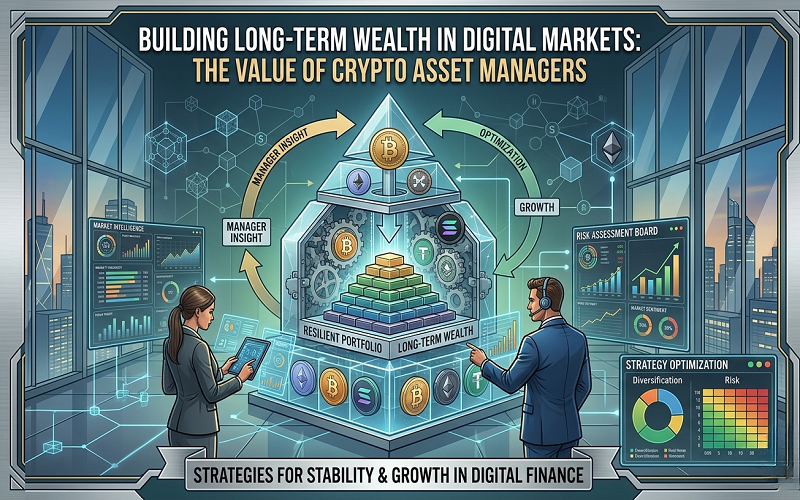
As digital assets become a larger part of modern investment portfolios, the need for professional oversight has grown. This trend has contributed to the rising importance of Crypto Asset Managers, who help investors navigate market volatility while maintaining a disciplined investment approach.
Rather than chasing short-term trends, professional asset management focuses on creating strategies that can withstand changing market conditions and support long-term financial goals.
Why Long-Term Investing Is Gaining Attention in Crypto
Long-term investing is based on a simple principle: wealth is often built through consistency rather than constant trading.
In cryptocurrency markets, this principle can be difficult to follow. Prices frequently experience dramatic swings, and news cycles often encourage investors to react quickly.
A long-term strategy helps investors avoid making decisions based solely on short-term market movements. Instead, it focuses on identifying assets with strong fundamentals, meaningful adoption, and long-term growth potential.
This approach has become increasingly relevant as blockchain technology expands into multiple industries.
What Do Crypto Asset Managers Bring to the Table?
Crypto Asset Managers provide expertise that combines investment management principles with blockchain market knowledge.
Their responsibilities typically include:
- Portfolio construction
- Digital asset research
- Risk assessment
- Market monitoring
- Asset allocation
- Performance evaluation
- Portfolio rebalancing
The objective is to help investors maintain a structured strategy rather than relying on emotion or speculation.
How Portfolio Resilience Is Created
A resilient portfolio is designed to adapt to different market environments.
No investor can accurately predict every market movement. However, portfolios can be structured to reduce vulnerability to unexpected events.
Diversification Across Asset Categories
Diversification remains one of the most effective risk-management tools available.
Within the crypto sector, diversification may include exposure to:
- Bitcoin and other established cryptocurrencies
- Smart contract platforms
- Decentralized finance projects
- Blockchain infrastructure networks
- Tokenized asset ecosystems
By spreading capital across multiple sectors, investors reduce dependence on a single asset or trend.
Maintaining Liquidity
Liquidity plays a critical role in portfolio management.
Assets with stronger liquidity profiles generally provide greater flexibility during periods of market stress. Professional managers often consider liquidity alongside growth potential when making allocation decisions.
Regular Portfolio Reviews
Markets evolve continuously. A portfolio that was balanced six months ago may no longer align with current market conditions.
Periodic reviews help ensure that investment allocations remain consistent with long-term objectives.
Why Emotional Investing Often Leads to Poor Outcomes
One of the greatest challenges investors face is controlling emotions during periods of uncertainty.
When markets rise rapidly, investors may become overly confident. During downturns, fear often drives rushed decisions.
These emotional reactions can lead to:
- Buying at inflated prices
- Selling during temporary declines
- Overexposure to speculative assets
- Inconsistent investment behavior
Professional management introduces structure that helps reduce emotional decision-making and encourages disciplined execution.
How Research Supports Better Investment Decisions
Not all digital assets offer the same long-term potential.
Successful investing requires understanding the factors that drive value within blockchain ecosystems.
Professional research often examines:
Network Adoption
Projects with growing user bases and active communities may demonstrate stronger long-term prospects.
Developer Activity
Consistent development can indicate ongoing innovation and ecosystem support.
Token Utility
Digital assets with meaningful use cases often have stronger foundations than those driven primarily by speculation.
Competitive Positioning
Understanding how a project compares with alternatives helps investors evaluate its potential sustainability.
Research-driven investing helps separate market narratives from measurable fundamentals.
The Rise of Institutional Participation
Institutional involvement continues to influence the evolution of digital asset markets.
Investment firms, pension funds, hedge funds, and corporate treasuries are increasingly exploring blockchain-related opportunities.
This growing participation has encouraged improvements in:
- Market infrastructure
- Custody solutions
- Regulatory compliance
- Transparency standards
- Risk management practices
As the market becomes more sophisticated, investors increasingly expect professional-grade portfolio management.
Why Risk Management Is More Important Than Predictions
Many investors spend significant time trying to predict which asset will generate the highest return.
While identifying opportunities is important, protecting capital is equally valuable.
Effective risk management focuses on questions such as:
- How much capital should be allocated to a position?
- How diversified is the portfolio?
- What risks could impact performance?
- How can downside exposure be controlled?
These considerations often have a greater influence on long-term outcomes than short-term market predictions.
The Future of Digital Asset Wealth Management
The cryptocurrency ecosystem continues to expand beyond simple cryptocurrency ownership. Decentralized finance, tokenized real-world assets, blockchain infrastructure, and digital ownership systems are creating new opportunities for investors.
As these markets become larger and more interconnected, portfolio management will likely play an increasingly important role.
For investors seeking long-term exposure to digital assets, Crypto Asset Managers provide a structured framework for navigating complexity, managing risk, and pursuing sustainable growth. Their expertise helps transform cryptocurrency investing from a speculative activity into a disciplined component of a broader wealth-building strategy.
The future of digital investing will not be defined solely by which assets perform best. It will also be shaped by how effectively investors manage risk, maintain discipline, and build portfolios capable of adapting to an evolving financial landscape.